Hey everyone! Your favorite English blog influencer here, ready to whisk you away on another cultural adventure. Today, we’re diving headfirst into something truly special: the unique and wonderfully warm world of Omani dining etiquette.
When I first started traveling, I quickly learned that understanding local customs, especially around food, isn’t just polite—it’s the secret sauce to truly connecting with people and their heritage.
Forget just seeing the sights; when you sit down for a meal in Oman, you’re not just eating, you’re experiencing centuries of deeply rooted tradition, hospitality, and community.
From my own experiences, I’ve found that the way people share a meal tells you so much about their values, and in Oman, those values shine brightly through every gesture and dish.
This isn’t just about forks and knives; it’s about humility, respect, and a generosity that truly touches your heart. So, if you’ve ever wondered how to navigate an Omani feast or want to make sure you’re showing proper respect at a local’s table, you’ve come to the right place.
Trust me, getting this right will transform your travel stories from good to absolutely unforgettable. Let’s get into the delicious details and ensure you’re perfectly prepared for your next Omani dining experience.
We’re going to discover all the essential tips together!
Stepping into an Omani Home: The Warmest Welcome
There’s something truly magical about being invited into an Omani home for a meal. It’s not just an invitation to eat; it’s an invitation into the heart of their culture, a genuine act of generosity that speaks volumes about their hospitality. From my very first visit, I felt this profound sense of being welcomed, almost like an honored family member. The air itself seems to hum with anticipation, a prelude to shared stories and delicious flavors. When that invitation comes, trust me, you absolutely want to accept. It’s one of those experiences that fundamentally changes how you view a place, transforming a simple trip into a deep, personal connection. I remember feeling a mix of excitement and a tiny bit of nerves, wanting to make sure I showed the utmost respect for their traditions. But the warmth of my hosts quickly put me at ease, their smiles making every gesture feel natural and easy. It’s truly a testament to the Omani spirit, how effortlessly they make you feel at home, even if you’re thousands of miles away from your own.
The Sacred Threshold: Removing Your Shoes
One of the first things you’ll do when entering an Omani home for dining is remove your shoes. This isn’t just a casual practice; it’s a deeply ingrained sign of respect for the household and its cleanliness. I’ve been in situations where I almost forgot, halfway stepping inside before a gentle reminder or seeing my host’s already neatly arranged footwear jogged my memory. It’s a small act, but it carries significant meaning, symbolizing humility and leaving the ‘outside world’ at the door. It signals your understanding and appreciation for their customs, and believe me, the hosts notice and appreciate the effort. It’s a beautiful way to start the dining experience, entering a space of shared comfort and tradition with reverence.
A Thoughtful Token: Bringing a Small Gift
When you’re invited to an Omani home, it’s a lovely gesture to bring a small gift for your hosts. Think of it as a ‘thank you’ before the feast even begins. I’ve found that simple things like a nice box of chocolates, a bouquet of flowers, or even some quality dates are always received with genuine appreciation. It’s not about the monetary value, but the thought behind it. I always try to pick something that feels personal, showing I put a little thought into their generosity. Presenting the gift with both hands is also a subtle yet important touch, conveying sincerity and respect. It really helps set a warm tone for the entire visit, making everyone feel more connected from the outset.
The Right Hand Rule: A Gesture of Respect at the Table
If there’s one piece of Omani dining etiquette that really stands out and requires a little mindful practice, it’s the emphasis on using your right hand. When I first encountered this, it felt a bit awkward, like learning to write all over again! In Omani culture, as in many Muslim societies, the right hand is considered clean and is exclusively used for eating, passing food, and handling anything that involves social interaction, including greetings. The left hand, by tradition, is reserved for personal hygiene, rendering it ‘unclean’ in a dining context. While it might feel foreign at first, especially if you’re naturally left-handed, making the effort truly shows your hosts that you respect their customs and traditions. I’ve had many laughs with Omani friends as I fumbled a bit, trying to scoop rice with my right hand, but their patience and understanding always made me feel comfortable. They genuinely appreciate the attempt, even if your technique isn’t perfectly mastered from day one.
Mastering the Hand-Eating Technique
Now, eating with your hands, particularly dishes like rice and stew, is an art form. My Omani friends taught me the trick: you gather a small, manageable ball of rice and perhaps a piece of meat or fish with your right fingertips. Then, using your thumb, you gently push it into your mouth. It sounds simple, but let me tell you, it takes practice! The first few times, I felt like a toddler, with rice escaping in every direction. But with a little patience and observation, you get the hang of it. It’s incredibly tactile and really connects you to the food in a different way. If you’re really struggling or simply prefer, don’t hesitate to politely ask for a spoon and fork. Many Omanis these days are quite used to guests preferring utensils, and it won’t be seen as an offense. However, giving the traditional method a genuine try is part of the adventure and definitely a memorable experience!
Shared Platters and Respectful Boundaries
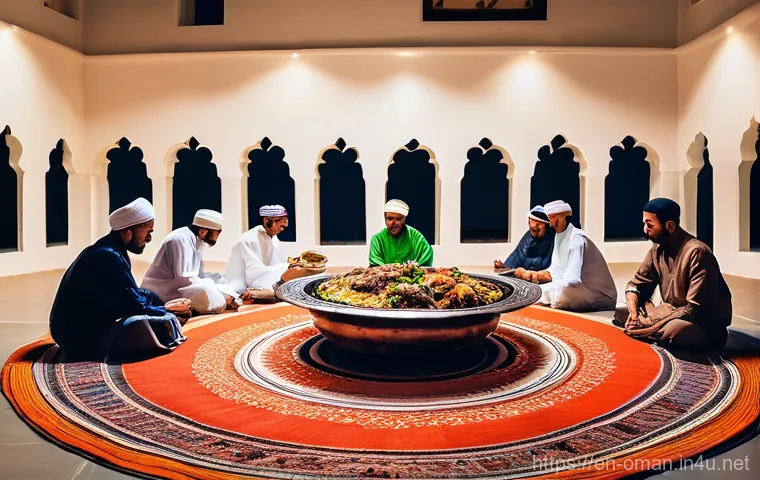
Meals in Oman are often a grand, communal affair, with generous portions of delicious food served on large platters placed in the center of the gathering. This sharing of food from a single dish truly symbolizes togetherness and abundance. When everyone is eating from one big central dish, a key piece of etiquette is to eat only from the portion directly in front of you. It’s considered impolite to reach across or delve into someone else’s “zone” on the platter. Think of it like an invisible boundary around your eating space. This small detail ensures a harmonious and respectful dining experience for everyone around the communal table. It’s fascinating how these traditions, seemingly simple, foster such a strong sense of community and consideration during meals.
Feasting Together: Embracing Communal Dining
Communal dining in Oman is more than just eating; it’s a powerful expression of hospitality and unity. When I first sat down on cushions on the floor, surrounded by friends and family, with a massive platter of Shuwa (slow-cooked lamb) taking center stage, I immediately felt a part of something ancient and truly special. It wasn’t about individual plates and segregated portions; it was about everyone sharing from the bounty, creating a tangible bond over every bite. This shared experience fosters conversation, laughter, and a deep sense of connection that you rarely find in more formal, individual dining settings. It makes you realize that food is not just sustenance, but a conduit for culture and relationships. I absolutely love how these meals become vibrant hubs of social interaction, with everyone contributing to the joyful atmosphere.
Honoring the Host: Waiting to Begin
One detail I quickly learned, and something that truly highlights the respect inherent in Omani culture, is to wait patiently for your host or the most senior person at the table to begin eating before you do. It’s a quiet acknowledgement of their effort, their generosity, and their position. I’ve sat at tables where delicious aromas filled the air, and my stomach was rumbling, but everyone waited. It felt like a collective breath, a moment of reverence before diving into the feast. This small act of patience and deference speaks volumes, showing that you value their hospitality and the tradition they uphold. It’s a beautiful way to honor the person who has so graciously opened their home to you.
The Art of Acceptance: Refusing Food is Impolite
In Oman, refusing food or drink when offered, even if you’re not particularly hungry or thirsty, can unfortunately be perceived as impolite. The hosts take immense pride in their offerings, viewing them as symbols of their generosity and care. My advice? Always accept at least a small portion. You don’t have to finish everything, but showing willingness to try a little bit of everything offered is a powerful way to express appreciation. I’ve certainly stretched my stomach limits a few times to respectfully sample the incredible array of dishes, from aromatic rice to tender meats and fresh salads. It’s a small price to pay for showing respect and truly embracing the rich culinary journey they’ve prepared for you.
The Ritual of Qahwa: More Than Just Coffee
Oh, Omani Qahwa! Where do I even begin? This isn’t just a beverage; it’s an entire experience, a cornerstone of Omani hospitality that transcends simple coffee. The moment I stepped into an Omani majlis, the rich, cardamom-infused aroma of Qahwa was the first thing that enveloped me, instantly making me feel welcome. It’s served with a grace that is almost ceremonial, typically in small, handleless cups called finjan, often alongside sweet, succulent dates. This pairing is a match made in heaven—the subtle bitterness of the coffee perfectly complementing the natural sweetness of the dates. It’s a moment of pause, reflection, and connection, where conversations flow easily and new friendships are forged. I’ve found that participating in the Qahwa ritual is one of the quickest ways to feel truly immersed in Omani daily life.
The Dance of the Dallah and Finjan
The serving of Qahwa itself is a beautiful dance. The host, often holding a traditional tall metal pot called a dallah in their left hand, pours the golden liquid into small finjan cups held in their right. What surprised me initially was that the cups are only filled about a quarter of the way. This isn’t a sign of scarcity; it’s actually a sign of respect and an invitation for refills! You’ll typically be offered several rounds, and it’s perfectly polite to accept a few. When you’ve had your fill, the simple gesture of gently shaking your cup from side to side signals to your host that you’re done. Without this subtle cue, they’ll just keep on refilling, which is a lovely problem to have, but good to know when you’ve reached your limit! It’s these small, intricate details that really make the Qahwa experience so special.
Sweet Companions: Dates and Halwa

As if Qahwa alone wasn’t enough, it’s almost always accompanied by a delightful spread of local sweets, with dates taking center stage. Omani dates are an absolute revelation—soft, chewy, and bursting with natural sweetness. I remember trying so many different varieties, each with its own unique flavor profile. Sometimes, you’ll also find Omani Halwa, a rich, gelatinous sweet often flavored with rosewater, saffron, and nuts. It’s incredibly indulgent and pairs wonderfully with the coffee. These sweet treats aren’t just for enjoyment; they’re also deeply symbolic, representing the sweetness of life and hospitality. It’s truly a sensory feast that leaves a lasting impression, making you crave that distinctive Omani taste long after you’ve left.
Thoughtful Gestures: Gifts and Gratefulness
When you’re invited into an Omani home, remember that you’re not just a guest, but an honored one. This goes beyond just the meal itself and extends to how you interact and express your gratitude. I’ve learned that a few thoughtful gestures can go a long way in showing your respect and appreciation for the incredible hospitality you’ll undoubtedly receive. It’s about recognizing the effort and generosity of your hosts, and reciprocating that warmth in a way that resonates with their cultural values. From the moment you arrive until you depart, every interaction is an opportunity to strengthen those newfound connections, transforming acquaintances into genuine friendships.
Table of Common Omani Gifts and Etiquette
To help you navigate these thoughtful exchanges, I’ve put together a quick guide based on my own observations and conversations with locals. This table outlines some common gift ideas and associated etiquette points that I’ve found incredibly useful when visiting Omani homes.
| Occasion | Suggested Gifts | Etiquette Notes |
|---|---|---|
| Home Invitation | Box of quality chocolates, dates, flowers, sweets from your home country | Present with both hands. Host may initially decline out of politeness; gentle insistence is appreciated. |
| General Appreciation | Small token of appreciation, useful household item | Keep it modest; value is in the gesture, not the cost. |
| Post-Meal Gratitude | Verbal thanks, genuine compliments on the food and hospitality | Heartfelt thanks go a long way. Praise the food and the host’s efforts. |
Expressing Sincere Appreciation
After a wonderful meal, expressing your gratitude sincerely is key. A heartfelt “Shukran” (thank you) and genuine compliments about the food and the hospitality are always deeply appreciated. I often find myself saying how much I enjoyed the specific dishes, mentioning their unique flavors, or simply marveling at the generosity. Omanis take immense pride in making their guests comfortable and well-fed, and acknowledging their efforts respectfully reinforces that positive connection. It’s these moments, sharing genuine appreciation, that truly bridge cultural gaps and create unforgettable memories, making you feel more like a friend than just a visitor.
Beyond the Bites: Conversation and Comfort
Dining in Oman is truly a holistic experience, extending far beyond the food itself. It’s about the entire atmosphere – the laughter, the stories, and the genuine connections forged around the table. I’ve learned that the conversation is just as important as the meal, serving as another layer of hospitality and cultural exchange. It’s a chance to truly connect with your hosts on a personal level, to learn about their lives, and to share a bit of your own. These interactions are what transform a delicious meal into a cherished memory. I often leave Omani homes feeling not just full, but enriched by the conversations and the warmth of the people I’ve shared them with.
Keeping Conversations Light and Respectful
When engaging in conversation at an Omani dining table, I’ve found it’s best to keep things light and positive. Your hosts are eager to make you feel comfortable and enjoy yourself, so focusing on pleasant topics like travel, family (if they initiate), or compliments about the food and their country is always a safe bet. It’s generally wise to steer clear of sensitive subjects like politics or religion, unless your host explicitly brings them up first. My personal rule of thumb is to follow their lead; if they delve into deeper topics, I engage respectfully, but otherwise, I stick to cheerful, engaging conversation. This approach ensures a relaxed and enjoyable atmosphere for everyone, allowing the camaraderie to flourish without any awkwardness.
Dressing the Part: Modesty for the Occasion
While not strictly about dining, remembering the importance of modest dress when visiting an Omani home is a crucial part of showing respect. Oman is a conservative country, and modesty is highly valued. For women, this means attire that covers your shoulders and knees. Loose-fitting, long-sleeved tops and long skirts or trousers are ideal. For men, long trousers and a shirt are appropriate. I always make sure to choose outfits that not only respect the local customs but also allow me to feel comfortable and confident. It’s not just about adhering to rules; it’s about showing that you’ve made an effort to understand and respect their way of life, which in turn enhances your entire cultural experience and allows you to truly immerse yourself in their hospitality without any unintentional missteps. Showing this level of cultural awareness is always appreciated.
Wrapping Up Our Omani Adventure
Stepping into an Omani home is truly more than just a visit; it’s a deep dive into a culture where hospitality isn’t just a custom, but a way of life. Every time I’ve had the privilege, I’ve left feeling like I’ve gained a new family, enriched by the warmth, the shared laughter, and the incredible food. It’s an experience that genuinely sticks with you, transforming a simple trip into a treasure trove of personal connections and unforgettable moments. If you ever get the chance, absolutely say “yes” to an Omani invitation; you’re not just accepting a meal, you’re embracing a profound and beautiful cultural exchange that will warm your heart long after you’ve returned home.
Handy Tips for Your Omani Visit
Here are some quick pointers to make your visit to an Omani home even more seamless and enjoyable, based on my own adventures:
1. Always remember to remove your shoes before entering an Omani home. It’s a sign of respect and cleanliness, and hosts truly appreciate the gesture.
2. A small, thoughtful gift like chocolates, dates, or flowers is a lovely way to show your gratitude. Presenting it with both hands adds an extra touch of sincerity.
3. Practice your right-hand eating! While it might feel awkward at first, making the effort to eat and pass items with your right hand is a significant show of cultural respect.
4. Be open to trying everything offered, even if it’s just a small portion. Refusing food can be seen as impolite, and honestly, Omani cuisine is too delicious to miss!
5. Embrace the Qahwa ritual. Accept a few refills, enjoy the dates, and remember to gently shake your cup side-to-side when you’ve had your fill to signal you’re done.
Key Takeaways for a Seamless Visit
Ultimately, experiencing Omani hospitality is about embracing their generosity with an open heart and a respectful mind. Focus on showing appreciation, adhering to simple customs like removing shoes and using your right hand, and engaging genuinely in conversation. These small efforts will unlock an incredible cultural experience, making you feel truly at home and creating memories that will last a lifetime.
Frequently Asked Questions (FAQ) 📖
Q: What’s the absolute first thing I should know about showing respect when dining in Oman, especially regarding hands and seating?
A: Oh, this is such a critical one, and it’s something I learned pretty quickly on my first Omani journey! The biggest takeaway? Always, always use your right hand when eating, passing food, or even shaking hands.
The left hand is traditionally considered unclean, and trust me, you don’t want to inadvertently cause discomfort or show disrespect. I still distinctly remember my friend Aisha gently reminding me when I instinctively reached for a date with my left hand at a family gathering – it was a kind nudge, but it drove the point home perfectly.
Beyond that, if you’re eating a shared meal from a communal platter, which is super common and incredibly heartwarming, try to take food from the portion directly in front of you.
As for seating, if you’re offered a place on the floor, embrace it! It’s a sign of immense hospitality and an incredible way to experience the local culture up close.
Just try to avoid pointing your feet at anyone, as the soles of the feet are also considered somewhat impolite to show. It might feel a little awkward at first, but honestly, people truly appreciate the effort you make to respect their customs, and it makes the entire experience so much richer and more authentic.
Q: Omani hospitality is legendary, but what if I’m unsure about how much to eat or if I should accept more food? I don’t want to offend my host!
A: This is a fantastic question, and it speaks volumes about the incredible generosity you’ll encounter in Oman! I remember feeling a bit overwhelmed by the sheer abundance of food when I first dined with an Omani family.
The short answer is: accept the offer, but don’t feel pressured to overeat. Hosts will often insist on giving you more, and it’s a beautiful expression of their hospitality.
A simple “Shukran” (thank you) and a gentle gesture to indicate you’ve had enough is usually perfectly understood. You might even hear them say “Sahtein” (to your health) as they offer more, which is their way of wishing you well.
From my experience, a good trick is to leave just a tiny bit of food on your plate (if you have one, or near your portion on the communal platter) to signal you’re satisfied, but not so much that it looks like you didn’t enjoy it.
It’s a delicate balance, but Omanis are incredibly understanding and patient. They’d much rather you enjoy yourself than feel uncomfortably full. The key is to convey your appreciation genuinely, and that goes a long way.
Q: Beyond just table manners, what’s the secret to truly connecting with Omani hosts during a meal and showing my genuine appreciation for their culture?
A: Ah, now you’re asking the real insider question, and it’s one that truly resonates with my own travel philosophy! While the practical etiquette tips are super important, the heart of connecting is all about genuine engagement.
I’ve found that simply asking questions about the food – where it comes from, how it’s prepared, or the traditions behind it – opens up such wonderful conversations.
Show interest in their stories, their family, and their way of life. Don’t be afraid to share a little about yourself too! It’s not just about the food; it’s about the shared experience.
For example, I once asked about a specific spice in a dish, and it led to an hour-long chat about local markets and family recipes. Another powerful tip: express your gratitude sincerely, not just with words, but with your warmth and presence.
A heartfelt “Shukran jazilan” (thank you very much) followed by an enthusiastic comment about how delicious everything is, or how honored you feel, truly makes an impact.
Omanis are incredibly proud of their heritage and their hospitality, and when you acknowledge that with genuine appreciation, you’re not just a guest; you become a friend.
It’s about letting yourself be fully present in that moment of shared humanity.